Environmental Metagenomics
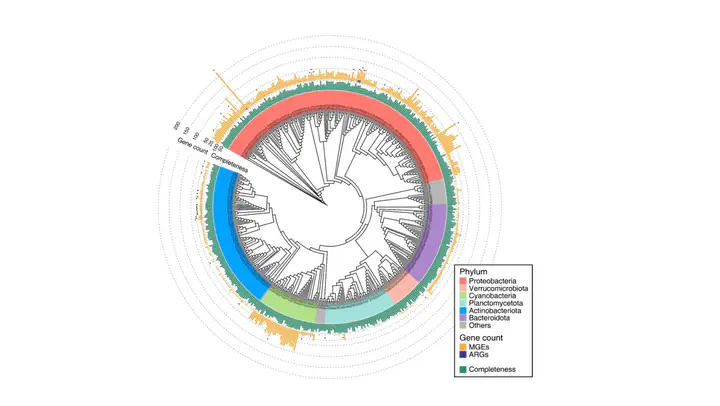
In the natural environment, an immense diversity of microorganisms exists, many of which remain unexplored in terms of their interactions and functions. To gain insights into these interactions, studies employing the metagenomics approach are essential. Thus, this project aims to elucidate the interactions among microorganisms in water and soil by integrating metagenomics and metatranscriptomics analyses. Additionally, employing a one-health approach, the project investigates the impact of environmental microbial communities on human or animal health.
Of particular interest is the role of the aquatic environment as a conduit for the transmission of microorganisms to humans, animals, and plants. Hence, this project explores to identify the dynamic changes occurring in microbial communities when exposed to emerging contaminants in aquatic environments. Furthermore, through metatranscriptomics analysis, the project investigates the horizontal gene transfer of antibiotic resistance genes and co-evolution mechanisms among microorganisms.
By delving into the intricate dynamics of microbial interactions and gene movements, this project contributes to our understanding of the ecological implications, health risks, and potential co-evolutionary processes occurring within microbial communities. The findings from this research have broader implications for environmental management, public health, and the development of strategies to mitigate the spread of harmful microorganisms and genes.

Min-Ji Kim
Ph.D candidate of Applied Biosciences
My research interests include metagenomics in one-health approach and host-micrbe interactions.